Order the wrong aggregate for a subbase, and you find out fast. The layer moves, the surface above it cracks, and you’re back on site putting right a job that should have held for years. MOT Type 1 vs 6F2 is one of the most common points of confusion for anyone sourcing bulk aggregates.
Both are widely used, both often go down as subbase or fill, and both are frequently ordered by name without a second thought. But they are not interchangeable. Choose the wrong one, and you affect load-bearing performance, compaction, and cost.

Here’s what each material is, how they differ, and which to use when.
What Is MOT Type 1?
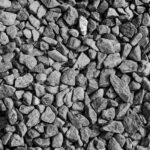
MOT Type 1 is a graded crushed aggregate, typically 0 40mm, manufactured to Highways specification under the Specification for Highway Works, Series 800. Its performance comes from the grading. It’s a well-balanced blend of larger stone down to fines, and that mix compacts into a dense, stable, load-bearing layer with very little movement once it’s down.
Typical materials include crushed limestone, granite, or recycled equivalents. At PP O’Connor, we produce MOT Type 1 Recycled to Highways specifications and quality-check it to ensure consistent performance from delivery to delivery.
As a Type 1 subbase, this is the go-to specification for:
- Roads and car parks
- Driveways and hardstanding
- Patios and block paving
- Building foundations
If you need a firm, level, load-bearing base directly beneath a finished surface, MOT Type 1 aggregate is almost always the right call.
What Is 6F2?
6F2 is a coarser material, typically graded up to 125mm, and also produced to Highways specification. It sits at a different point in the buildup. While Type 1 is the finished subbase, 6F2 is a capping and bulkfill material designed to go down first.
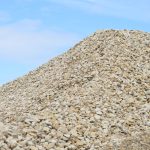
6F2 aggregate often contains a higher proportion of recycled content, including crushed concrete, brick, and asphalt planings. The larger particle size makes it ideal for moving volume and establishing a stable platform over softer or uneven ground, rather than for creating a fine, finished surface.
Common 6F2 aggregate uses include:
- Capping layer beneath a subbase
- Bulk fill and raising site levels
- Filling voids
- Large-scale groundworks and earthworks
At PP O’Connor, 6F2 is supplied as a cost-effective capping aggregate, ideal for building up levels before the subbase goes on top.
MOT Type 1 vs 6F2: The Key Differences
The simplest way to understand 6F2 vs Type 1 is to look at them side by side.
Feature MOT Type 1 6F2Particle size/grading 0 40mm, well graded to fines Coarser, up to 125mm Position in buildup Subbase (upper layer) Capping/fill (lower layer) Primary role Load-bearing base for surfaces Bulk fill and platform over soft ground. Finish quality: Fine, compacts to a smooth base. Coarse, not a finished surface. Typical cost per tonne: Typically higher. Typically lower.
6F2 is the coarser, lower-cost capping and fill layer that goes down first on softer or uneven ground. MOT Type 1 is the finer, more expensive subbase that sits above it and creates the stable, load-bearing surface ready for the final layer. One raises and stabilises. The other finishes and bears the load.
Which Should You Use?
The right choice comes down to the job in front of you.
- Driveway, patio or path: MOT Type 1 as the subbase. On reasonable ground, this is all you’ll need beneath the finished surface.
- Large fill, level correction or capping over soft ground: 6F2 first to build the platform, usually with MOT Type 1 on top.
- Deep buildups on poor ground: both, layered correctly. 6F2 does the heavy lifting on volume and stability; Type 1 provides the finished base.
On many larger projects, they’re used together rather than as an either/or. 6F2 establishes the platform; Type 1 completes it. Treating them as rivals misses how they’re actually specified on site.
If you’re working to a drawing or a groundworks spec, check what’s been called for before you order. If there’s any doubt, a good supplier will tell you what suits the ground and the load you’re dealing with.
Frequently Asked Questions
What is the difference between MOT Type 1 and 6F2?
MOT Type 1 is a well-graded crushed aggregate (040mm) used as a subbase it compacts into a dense, stable, load-bearing layer directly beneath a finished surface. 6F2 is a coarser material graded up to 125mm, used as a capping and bulk fill layer to establish a stable platform over softer or uneven ground before the subbase goes on top. Type 1 sits higher in the buildup and costs more per tonne; 6F2 is the lower-cost first layer that moves volume and raises levels.
Can you use 6F2 instead of Type 1?
No, they serve different roles in a build-up and are not interchangeable. 6F2 is a capping and fill material designed to go down first over soft or uneven ground; it does not compact to the fine, load-bearing finish that MOT Type 1 provides. If your project calls for a firm, level subbase beneath a driveway, patio, or block paving, you need Type 1 for that layer.
Is Type 1 or 6F2 better for a driveway?
MOT Type 1 is the right choice as the subbase for a driveway on reasonable ground; it is all you need beneath the finished surface. 6F2 would only come into play if you are building up levels or capping particularly soft ground first; in that case, 6F2 goes down as the lower capping layer, with Type 1 on top.
The Final Takeaway
6F2 is your coarse, cost-effective capping and fill layer. MOT Type 1 is your finer, load-bearing subbase. On smaller jobs, you’ll often need just the Type 1. On deeper buildups over soft ground, you’ll want both, laid in the right order. Getting that specification right the first time is what protects the durability of the finished surface for years.
If you’re not sure which material your project needs, or you want to talk through bulk supply, the PP O’Connor team is happy to advise. Call 0161 776 0333 or email contact@ppoconnor.co.uk.