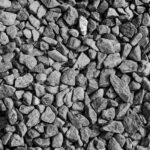
Walk past any active demolition site, and what you’re looking at isn’t waste, it’s raw material. Crushed concrete, broken brick, reclaimed stone, unbound aggregate: all of it has structural value, provided it’s processed correctly and certified to the right standard. The problem is that for a long time, the construction industry didn’t treat it that way. Demolition material went to the landfill. Fresh quarried stone came in to replace it. And the cycle repeated, project after project.
That’s changing. Recycled aggregates are now a mainstream material choice across construction, landscaping, and groundworks, tested to the same standards as virgin quarried stone, available next day, and certified under the WRAP quality protocol. For contractors and landscapers across Greater Manchester and the North West, using recycled aggregates isn’t a compromise. It’s a smarter way to build.

THE MATERIAL THAT WOULD OTHERWISE BE LOST
Every demolition site generates material. Crushed concrete, broken brick, reclaimed stone, tonnes of it, cleared from the site and replaced with freshly quarried alternatives. For decades, that was simply how construction worked. Material in, material out, landfill somewhere in between.
Recycled aggregates change that equation. Rather than disposing of demolition waste and extracting new virgin material to replace it, they close the loop by processing what’s already been used into a certified, performance-tested product ready for its next application. The result is that recycled aggregates reduce waste at both ends: less material going to landfill and less demand on quarried stone.
For contractors and landscapers across Greater Manchester and the North West, this isn’t an abstract environmental argument. It’s a practical material choice with real, measurable results on site.
WHAT RECYCLED AGGREGATES ARE AND HOW THEY’RE MADE

Recycled aggregates are produced from construction and demolition waste, crushed concrete, brick, asphalt, and unbound stone that have been sorted, screened, and graded to meet specific technical standards. Rather than extracting new material from quarries, the process repurposes what already exists.
At PP O’Connor, the recycled aggregate range covers the four core applications most contractors and landscapers need. MOT Type 1 Recycled is the most widely used product, easily compacted to create a firm, stable base for roads, pathways, driveways, and under concrete slabs. 6F2/6F5 aggregate serves as a cost-effective capping layer beneath MOT Type 1, used for roads, footpaths, and site levelling. Washed clean aggregates, available in 40-20mm and 75-40mm sizes, are suited to drainage, land drains, foundations, and Type B filter media. Washed recycled pipe bedding, available in 10-5mm and 20-10mm single sizes, is used for flagging, screeding, blinding, and block paving.
All products are manufactured and tested in accordance with the WRAP quality protocol, Series 600 for groundworks, and Series 800 for highway works. Every load delivered to the site has been independently certified, not processed and hoped for the best.
FROM DEMOLITION SITE TO FINISHED DRIVEWAY
HOW THE PROCESS WORKS
The route from demolition rubble to driveway sub-base is more straightforward than most people expect. Demolition material is collected, sorted, and processed through crushing and screening to produce graded aggregate that meets the same technical specifications as its quarried equivalent. That material is then tested, certified, and made available for delivery the next day, if required, across Greater Manchester and the North West.
A REAL-WORLD APPLICATION
On a typical driveway project, the logic is straightforward. 6F2/6F5 recycled aggregate is used first to raise and level the ground where needed, providing a stable platform for the layers above. MOT Type 1 Recycled goes down on top as the compacted sub-base, creating the firm, load-bearing foundation that supports the finished surface. For block-paved driveways, washed, recycled pipe bedding provides the bedding layer beneath the blocks.
Recycled materials, right through the build. This is precisely how aggregates reduce waste in practice, not through compromise, but through material substitution that performs to the same standard as virgin stone.
PERFORMANCE WITHOUT COMPROMISE
The performance argument for recycled aggregates has never been stronger, and the certification trail backs it up. PP O’Connor’s MOT Type 1 Recycled is manufactured in accordance with the WRAP protocol and independently graded and certified. Washed recycled pipe bedding is regularly tested to British Standard BS EN 13242. These aren’t approximations of quarried products; they’re certified, independently verified materials that meet the same specifications.
Beyond performance, using certified recycled aggregates reduces demand for virgin resource extraction and cuts the volume of demolition material going to landfill. For contractors looking to demonstrate responsible material sourcing, and for developers under pressure to evidence sustainability commitments, recycled aggregates provide a credible, documented answer.
PP O’Connor has been supplying construction professionals across Greater Manchester and the North West since 1960. With over 50 tipper wagons, FORS Gold accreditation, and professionally trained drivers, materials reach the site quickly and reliably, with next-day delivery as standard, with flexible load sizes below 20 tonnes available for smaller projects.
FAQs
WHAT ARE THE BENEFITS OF RECYCLED AGGREGATE?
Recycled aggregates offer three clear advantages: cost, performance, and environmental responsibility. They are typically more cost-effective than virgin quarried alternatives. When certified to the WRAP quality protocol, as all PP O’Connor recycled aggregates are, they meet the same technical standards for sub-base, capping, drainage, and pipe bedding applications. And by repurposing construction and demolition waste rather than extracting new material, they reduce the environmental impact of a project at both ends of the supply chain.
HOW DOES USING RECYCLED MATERIALS REDUCE WASTE?
Using recycled aggregates reduces waste in two direct ways. First, it diverts construction and demolition material, crushed concrete, brick, and stone away from landfill by giving it a certified second use. Second, it reduces demand for virgin quarried stone, thereby reducing extraction and associated environmental disruption. When tested and certified to recognised standards such as the WRAP quality protocol and BS EN 13242, recycled aggregates deliver this environmental benefit without asking the contractor to accept any reduction in performance.
WHICH RECYCLED AGGREGATE IS BEST FOR A DRIVEWAY?
For a standard driveway, MOT Type 1 Recycled is the go-to sub-base material it compacts to a firm, stable base and is independently certified to the WRAP protocol. Where ground levels need to be raised first, 6F2/6F5 capping aggregate is used beneath the MOT Type 1. For block-paved driveways, washed, recycled pipe bedding in 10-5mm or 20-10mm single sizes provides the bedding layer. Used together, these three products give you a driveway built entirely from certified recycled materials.
ARE RECYCLED AGGREGATES SUITABLE FOR DRAINAGE APPLICATIONS?
Yes. Washed clean recycled aggregates in 40-20mm and 75-40mm sizes are specifically suited to drainage applications, including soakaways, land drains, foundations, and Type B filter media. The washing process removes fines and dust, leaving an open-graded material that allows water to pass through freely. All PP O’Connor washed clean aggregates are tested in accordance with the WRAP quality protocol, Series 600 for groundworks, and Series 800 for highway works.
PUT RECYCLED AGGREGATES TO WORK ON YOUR NEXT PROJECT
Whether you’re reinstating a driveway, preparing groundworks, or managing a larger construction project, recycled aggregates offer a practical, certified, and cost-effective route to reducing waste without compromising on quality.See the full range of recycled aggregates from PP O’Connor at www.ppoconnoraggregates.co.uk or get in touch with the team directly on 0161 776 0333 or contact@ppoconnor.co.uk.