Recycled aggregates are produced by crushing and grading construction and demolition waste such as concrete, brick, asphalt, and stone. They are widely used in groundwork and infrastructure projects, particularly for sub-bases, temporary access roads, trench backfill and general fill material. Understanding the advantages and disadvantages of recycled aggregates is essential when deciding whether they meet the technical and structural needs of a particular site. While these materials can reduce costs and waste, they do not offer the same performance profile as quarried aggregates. This article explains how recycled aggregates are made, where they are most effective, and what to consider before selecting them for use.
What Counts as a Recycled Aggregate and How It’s Produced
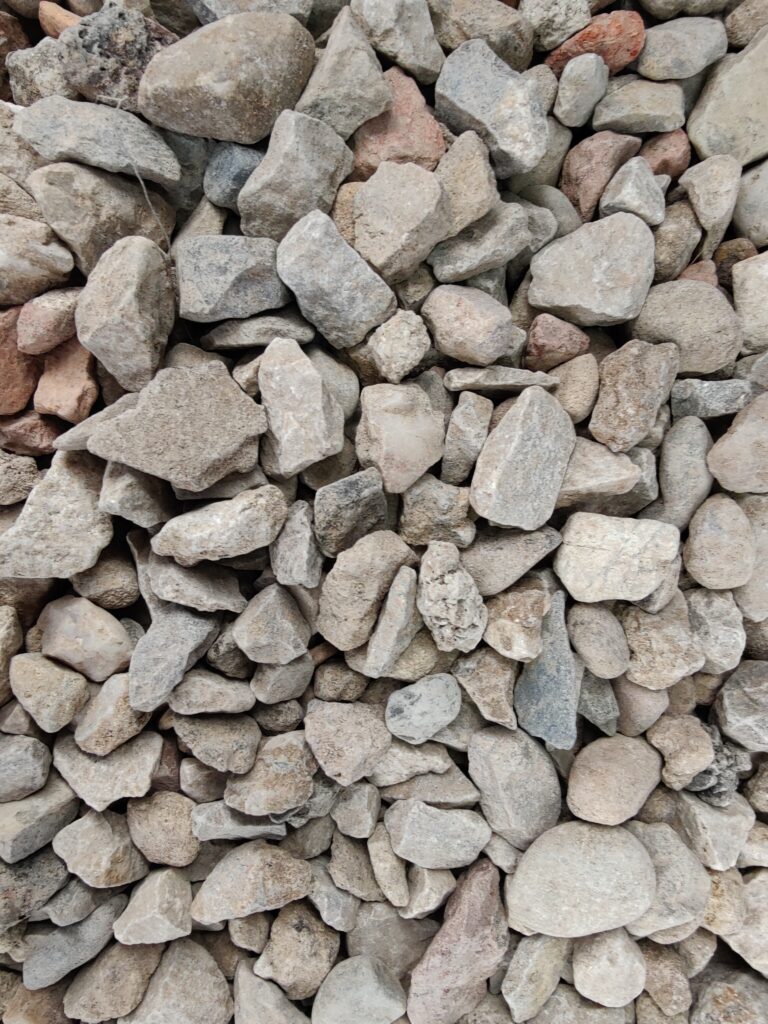
Recycled aggregates are made from hard inert materials recovered from demolition sites. Typical sources include crushed concrete, tarmac, brick, and unbound stone. Once collected, these materials are sorted, screened, crushed, and graded to meet specific sizing and quality standards. Common recycled products include MOT Type 1 recycled, 6F2, and recycled pipe bedding. The suitability of these products depends not just on particle size, but also on the absence of contaminants such as wood, plaster, glass or plastics. Quality control processes such as WRAP protocols help ensure that material is consistent and fit for purpose, particularly where recycled aggregates are used in road sub-bases or engineered fill.

Where Recycled Aggregates Perform Well
Recycled aggregates are well suited to a range of non-structural applications where cost and material volume are key concerns. They offer good load distribution and compaction when used for sub-bases beneath roads, paths, and hardstandings. Materials like 6F2 are widely used in capping layers and haul roads due to their strength and availability. Recycled pipe bedding is often used in trench reinstatement, especially where site access or delivery limitations prevent the use of primary materials. These aggregates reduce the volume of material sent to landfill and provide a lower carbon alternative for general fill. When sourced from a supplier that follows recognised grading and contamination control procedures, recycled aggregates can match many of the functional requirements of quarried stone.
Limits, Risks, and Specification Gaps
Despite their usefulness, recycled aggregates are not appropriate for every application. One of the main limitations is variability. Recycled materials often include a mix of sources, which can lead to inconsistent particle shape, moisture content, or density. Contaminants such as gypsum, organic material, or embedded metal can also affect performance or leach into surrounding soil. High-sulphate content or excessive fines may cause chemical reactions in concrete or affect drainage. As a result, recycled aggregates are not suitable for structural concrete, reinforced slabs, or any area where grading precision or long-term durability is critical. Even when used in general fill, testing and approval may still be required depending on the project specifications.
Site-Based Assessment and Application
The decision to use recycled aggregates should be based on the specific conditions and requirements of the site. Making informed decisions on-site and off-site requires knowledge of the material’s source, composition, and performance limits. For example, a capping layer beneath a haul road may be fine with 6F2 recycled aggregate, while a high-load concrete slab will require certified primary stone. Soil type, drainage requirements, and expected load must all be taken into account. In many cases, blending recycled aggregate with clean quarried material may offer a balance between performance and cost. Contractors should also be aware of local authority requirements or project specifications that may restrict or define how recycled products are used.
Delivery, Handling, and Storage Considerations
Once a recycled aggregate has been selected, it must be handled properly to preserve its properties. Delivery options typically include tipper lorries, grab wagons, and articulated vehicles depending on access and volume. On-site storage should protect the material from water saturation, which can affect compaction and introduce fines. Material should be inspected for contamination or segregation before use. If working to strict tolerances, it may be worth conducting a compaction trial or particle size distribution test on the delivered batch. Efficient loading and handling also prevent cross-contamination, particularly if multiple aggregate types are being used on the same site.
Balancing Cost, Performance, and Risk
Recycled aggregates provide a practical and sustainable option for many construction tasks, particularly in groundwork and bulk fill. Their cost-effectiveness and wide availability make them a strong choice where performance criteria allow for some flexibility. At the same time, they require careful assessment to ensure they meet the demands of the job. Technical limits, quality control, and site-specific factors should always guide material selection. Where those considerations are understood, recycled aggregates can contribute to both project efficiency and environmental goals.
Contact us for technical guidance or to arrange delivery to your site.